

Feral hogs in Mexico are a problem that grows out of control
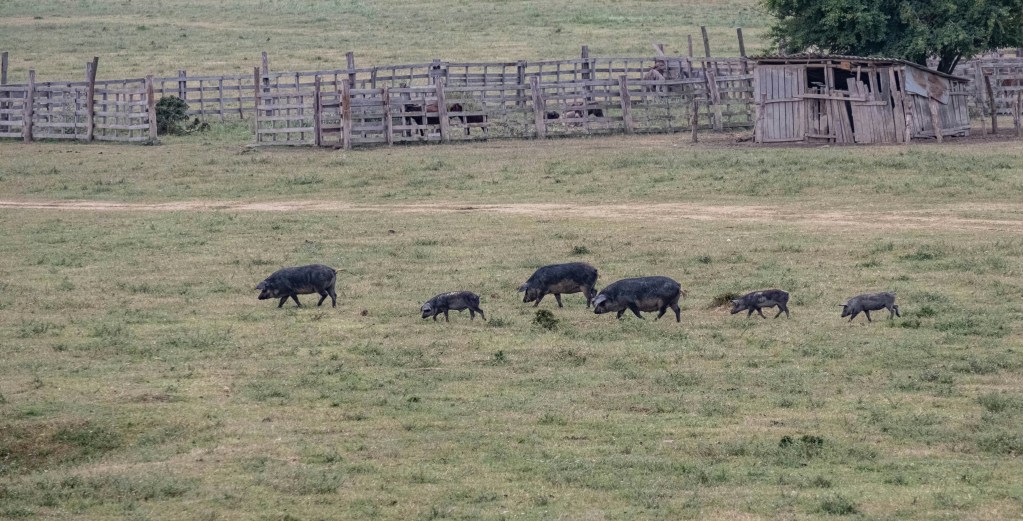
In the states of Tamaulipas, Nuevo León and Coahuila, wild boars - also known as feral hogs -are no longer a rarity but an out-of-control pest. These invasive species, originally introduced by humans, have found in northern Mexico an ideal habitat to reproduce unchecked and wreak havoc in both rural and urban areas.
How serious is the situation?
- In Coahuila, farmers report that a single herd can destroy up to one hectare of crops in a single night, affecting mainly corn and beans.
- In Tamaulipas, wild pigs have been detected scavenging in urban areas such as Tampico, Madero and Altamira.
- In Nuevo León, they have already been seen in urban parks and nature reserves, which poses a safety risk to people and pets.
And the most worrying thing: there are no clear official figures on how many there are. What we do know is that each female can give birth to more than 10 offspring per year, making this pest a biological time bomb.
Ecological and economic impact
Wild pigs are highly destructive. With their snouts they rotate the ground in search of food, which they do with their snouts:
- Erosion of the soil.
- Damages pastures and crops.
- Contaminates water bodies with feces and bacteria such as E. coli.
- Affects biodiversity by competing with native species.
In Texas, a state that has been facing this problem for decades, losses amount to more than $500 million annually, including damage to agriculture, infrastructure and natural resources.
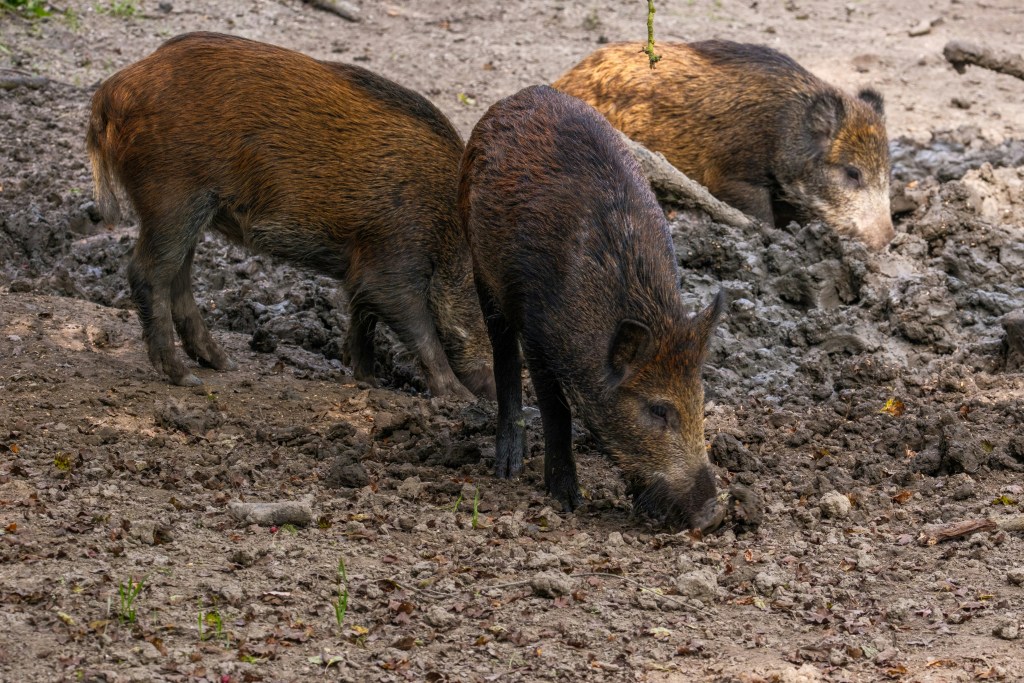
Wild pigs dig up the land in search of food - a behavior known as rooting - causing erosion, loss of pastures and destruction of crops. In Mexico, although there are no exact official figures, producers in the north of the country estimate losses of tens of millions of pesos annually. tens of millions of pesos annuallyespecially in agricultural areas of Coahuila, Nuevo León and Tamaulipas.
What is Texas doing to combat them?
In addition to sport hunting, Texas has developed a comprehensive and aggressive strategy to control this pest. Among its most notable actions:
- Aerial hunting from helicopters: One of the most effective measures. Specialized teams fly over ranches and rural areas to shoot the herds from the air, since it is almost impossible to do it as effectively on the ground.
- Automated traps: High-tech traps activated remotely by real-time cameras are used to capture entire groups.
- State and federal programs: The USDA (U.S. Department of Agriculture) has invested millions of dollars in studies and eradication programs, with visible results.
Are we on time in Mexico?
Yes, there is still time. But the clock is ticking.
The problem in northern Mexico is growing rapidly, and if action is not taken now, we will experience a situation like Texas... or worse. Our producers are already suffering economic losses, our ecosystems are being altered, and our cities could become risk zones.
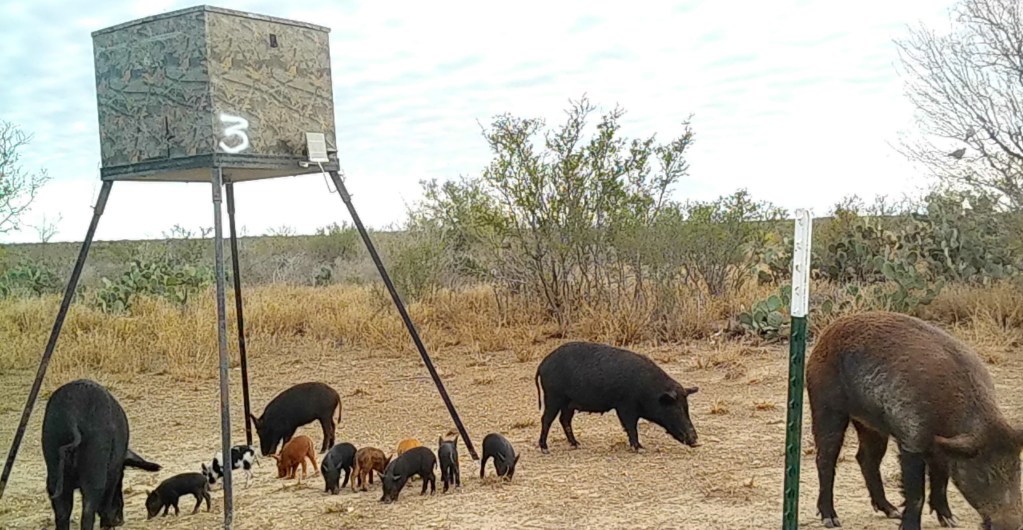
A female wild hog with her young occupies a feeding trough for native fauna. This scene represents a direct threat to ecosystems: they displace species such as white-tailed deer and contaminate feeding grounds. A single female can have more than 10 offspring per yearThis causes their population to grow exponentially if left unchecked.
What can we do?
- Recognize the problem: These are not species that belong to the natural ecosystem. They are an invasive species that represent a real risk.
- Allow and promote hunting: In a regulated, but active manner. Coordination between ejidatarios, environmental authorities and responsible hunters is needed.
- Implement professional monitoring and control: Universities, municipalities and states should work together to study their behavior and create effective strategies.
- Learn from Texas: Let's not reinvent the wheel. We can adapt their methods to our conditions. Aerial hunting, group trapping and population monitoring programs are perfectly replicable in our country.
Conclusion
Feral sows are expanding in northern Mexico. If we ignore the problem, their impact will be devastating to our agriculture, environment and quality of life. But if we act now, we can stop their advance.
Let's not wait until it's too late.